
NSW Plumbing Licence 456767C
Sewer Pump Services operates under a current NSW plumbing contractor licence — licensed plumbing and drainage work, on record.
Specialist repair of sewer, stormwater and grease trap pumps across Sydney. Diagnostic-led — megger and amp testing, mechanical inspection, and an honest call on repair vs replacement. Single-visit on most jobs, per-visit pricing, no subscriptions.
Tell us what the pump is doing — alarm sounding, tripping the breaker, running but not shifting anything, or dead quiet. We'll come back the same business day with what the repair likely involves. For an active overflow, please call instead.
Urgent? Call 0415 210 267 — 24/7.
Most pumps don't fail from old age — they fail from one of a handful of faults, and we see the same ones over and over: a fouled float, something flushed that's jammed the pump, breakdown in the motor's insulation, worn bearings, a failed non-return valve, or a worn rotor and stator on the older Mono units. The job of a repair visit is to find which one, fix it cleanly, and tell you honestly whether the rest of the pump has the lifespan left to make the repair worth it.
We've specialised in sewer and stormwater pumps since 1985 — across Sydney homes, strata buildings and food businesses. It's all we do, and that's what makes the diagnosis the difference: a megger test on the motor windings and an amp-draw reading at the panel on every visit, so the call to repair or replace is made on the numbers, not a hunch.
Most repairs are done in a single visit — we carry the parts that fail most often on the van, and quote the work on the day before we start it. If your pump's failing right now and the pit is filling, that's an emergency — see our emergency callouts page, or call us direct.
A few words from people whose pumps we've sorted.
Excellent service - professional, punctual and knowledgeable and quickly identified and fixed the issue. No BS at all with a great down to earth personality. Everything was explained clearly. Very happy with the service. Highly recommended to all!
The boys came out on an urgent emergency call at the aus meat emporium for a busted grease pit pump. They come in on time and are very knowledgeable at what they do. Very clean and tidy. Honest and reliable father and son combo. Highly recommend.
We had an old two pump sewer system that was constantly playing up - one pump had already failed and the other wasn't far behind. Ayden came out, assessed it properly and explained that for our setup a single pump would actually do the job better and save us money long term, rather than just replacing like for like. Changeover was done in a day. Neat work on the pit and pipework, everything tested before he left and he showed me how the alarm and controls work. Quoted price was the final price. Honest, knows sewer pumps inside out, highly recommend!!
I needed urgent help with a sewer pump station. Ayden turned up as promised. Took his time to explain what was required for the job at hand and offered sound practical advice. I highly recommend Sewer Pump Services. For prompt professional service and advice they’re the people to call. Thanks Ayden.
After contacting several plumbing companies, I chose Sewer Pump Services because of their extensive knowledge and expertise in sewerage pump systems. They were very patient in answering all of my technical questions and took the time to explain everything clearly, which gave me confidence in making the right decision. They worked carefully and professionally throughout the installation. It was obvious they take pride in their work and genuinely care about doing the job properly. If you’re looking for a company with real expertise in sewerage pump systems, I highly recommend Sewer Pump Services. Thank you for your excellent service!
Ayden was very responsive when we reached out for some help with our system. He got our pump working again for the interim, then ordered in a replacement pump and completed the installation as soon as it was delivered. Couldn't be happier with the result, Ayden really knows his stuff!
We engaged Ayden to help with quite a tricky stormwater pump situation. Not only was he clear in his explanations, he was always courteous and very professional. The job took a few days and his team were very thorough and knew what they were doing. I can recommend Ayden and Sewer Pump Services highly and without hesitation.
Fantastic service, lovely people to deal with and a great job! Really happy with my new pump.
Great team of guys, quick to respond, professional and very experienced at what they do.
Fantastic workmanship all done within a timely manner good tradie to deal with!
[Sewer Pump Services] were outstanding. Service, communication, problem-solving, and advice were all exceptional. They left our property spotless as well.
Always very good service.
Pumps tend to fail from a handful of things — and most of them we sort in a single visit. Here's what actually goes wrong, and what we do about it.
Fat, wet wipes and rag coat the float and weigh it down so it can't rise as the pit fills — the pump never gets the signal to start, the pit overflows, and the alarm trips. We free or replace the float, clean the pit, and replace the switch if the cable insulation has gone.
Rags, cloths, underwear, baby wipes — anything flushed that shouldn't be — wrap around or lodge in the impeller and bring the pump to a stop. On a system set up right, the overload trips it off before the motor burns out. We lift the pump, clear the blockage, check the impeller and float, and recommission.
Worn shaft seals let moisture into the motor windings. Insulation resistance drops and the motor eventually shorts to ground or trips its overload. It shows up on a megger reading before it takes the pump down — which is why we test every visit.
Bearings wear from age, grit ingress, or short cycling that runs the pump dry. You'll hear it before you see it — bearing rumble, rising amp draw, then heat. Caught early it's a rebuild; left too long the bearings collapse and take the windings with them.
A jammed or worn valve lets pumped water fall straight back into the pit the moment the pump stops, so the pit backwashes after every cycle and the pump works far harder than it should. We isolate the line, replace the valve, and watch a full cycle to confirm the pit holds.
On the older above-pit Mono pumps — progressive-cavity units with a chrome rotor turning inside a rubber stator — the stator wears like a tyre and the pump slowly loses its push. We fit a new stator — and the rotor too if it's worn — then recommission. Still common on older Sydney systems.
We also rebuild control panels and switchgear under our Restricted Electrical (Motors) endorsement, and where a pump's genuinely past saving we replace it like-for-like on the existing pit and pipework — see repair or replace below.
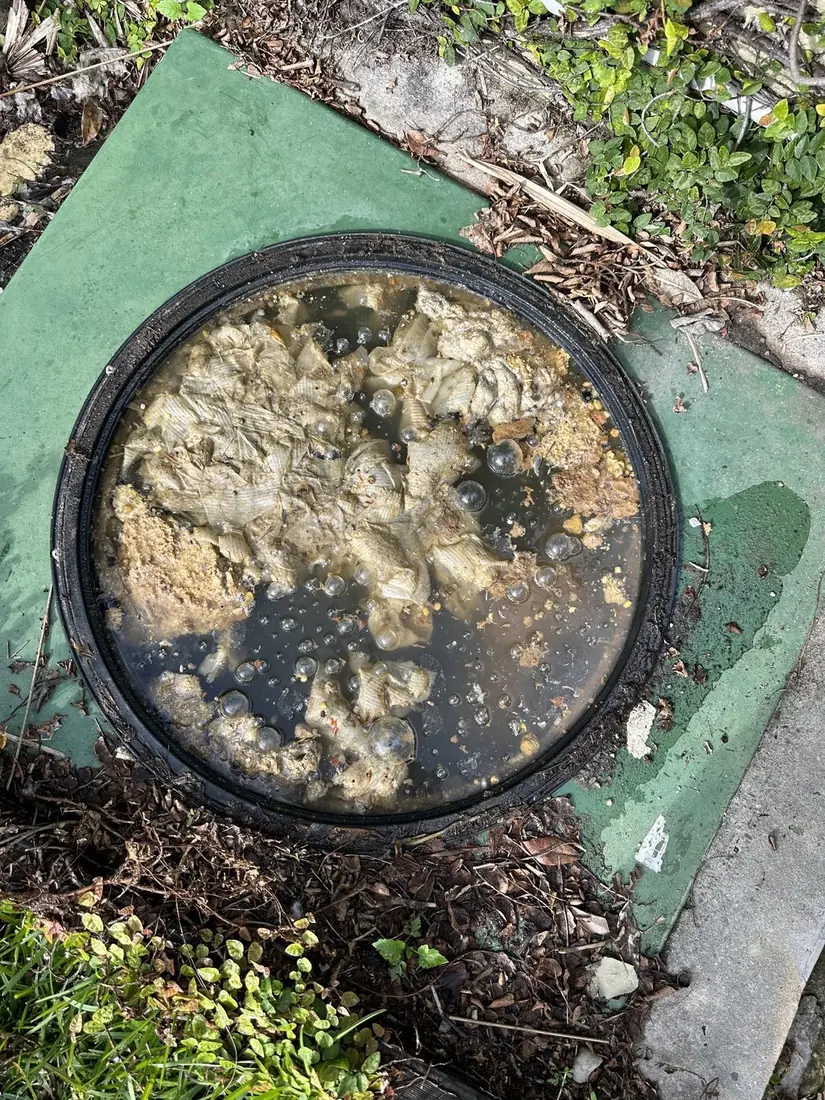
A residential sewer pump choked with hardened fat. The float couldn't rise, fat had risen to the surface of the pit, and the pump had stopped keeping up before the call came in. Three photos from one job.
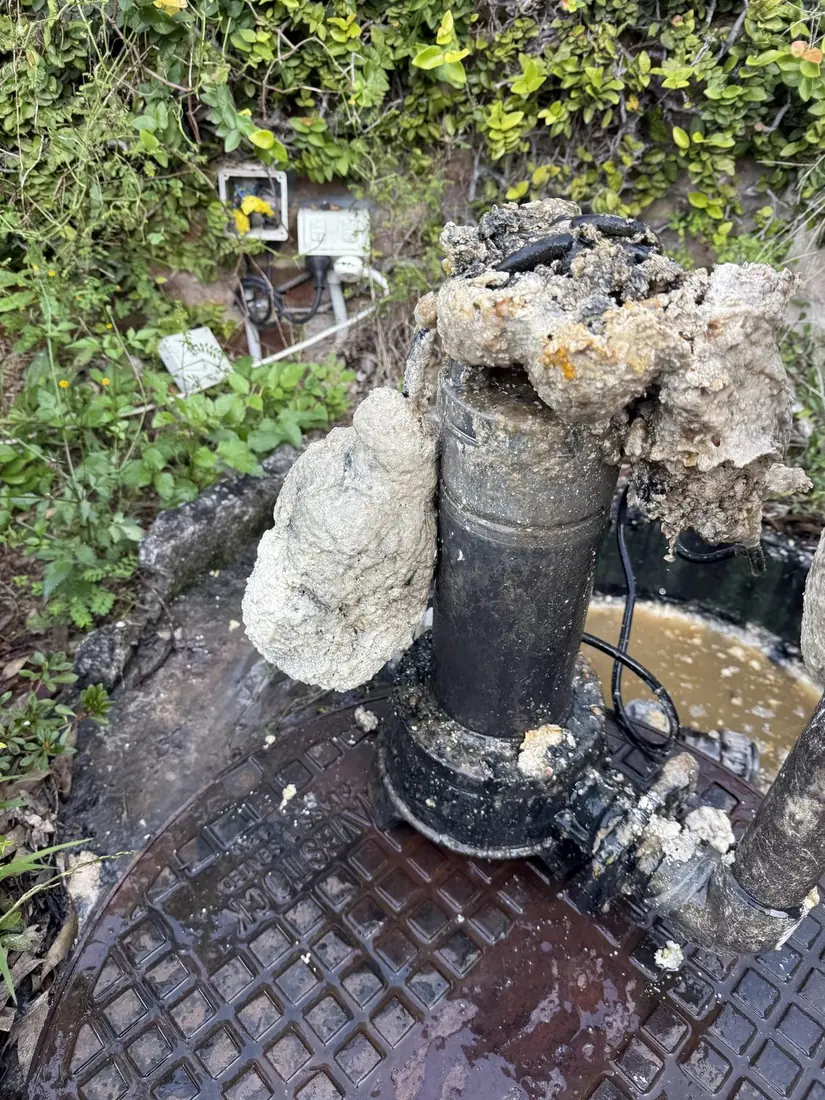
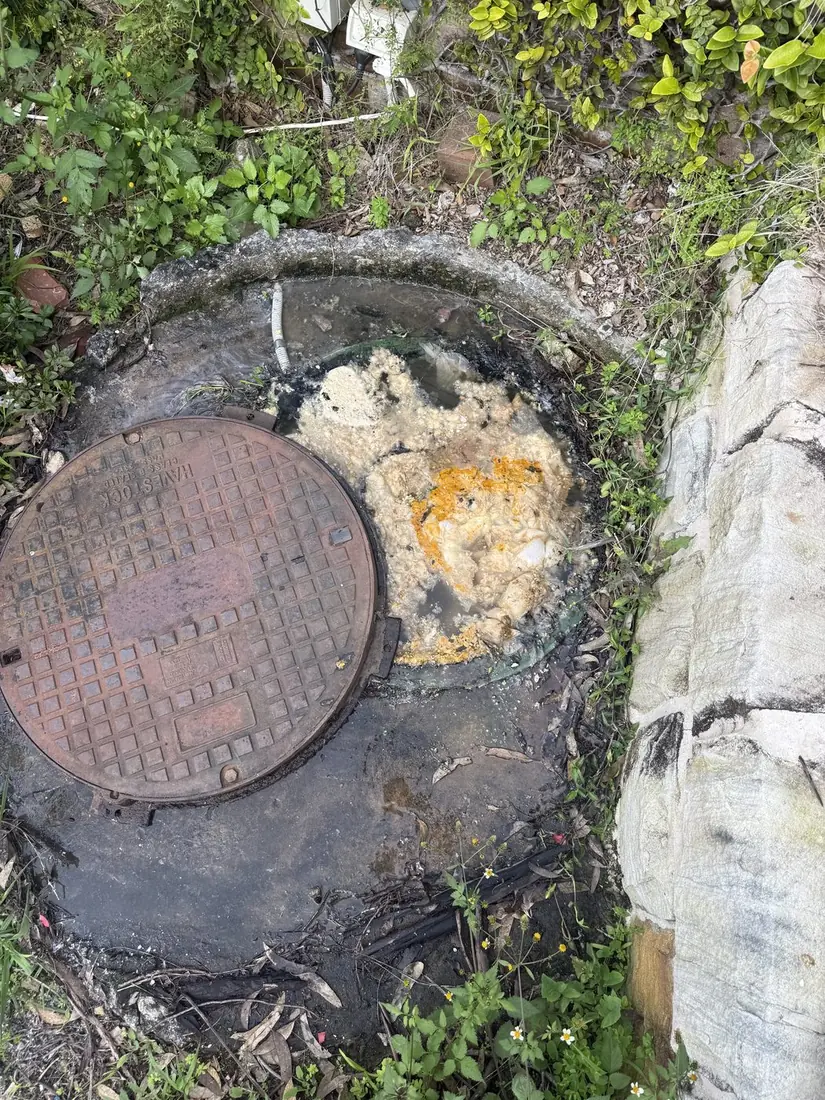
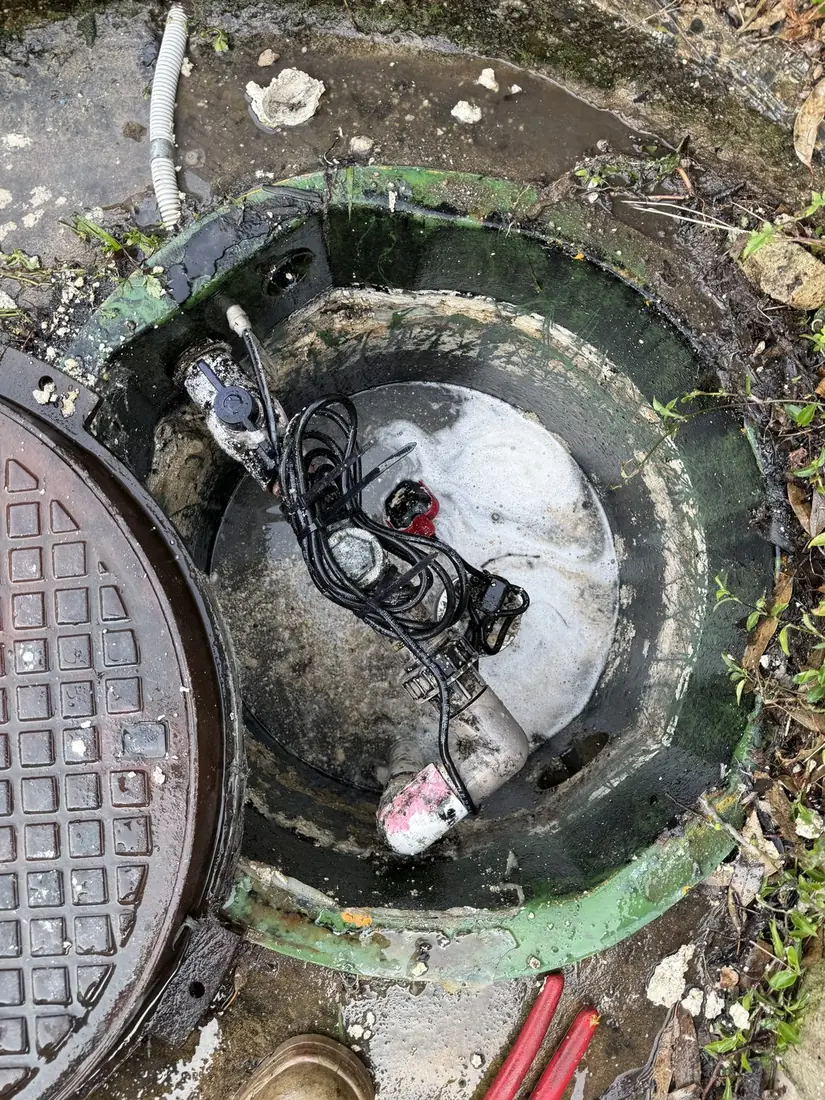
Sewer pumps cop the worst of what goes down the drain. Fat coats the float, wet wipes or rag wrap the impeller, and grease hardens in the rising main until the pump is working harder every cycle to shift the same volume. Wet wipes are the biggest culprit — they don't break down like paper, so the ones that slip past the trap end up fouling the float or jamming the impeller.
Most sewer repair work is float replacement, clearing a jammed or fouled pump, a non-return valve swap, or control panel work. Grease trap pits mostly run vortex pumps — it's only when the pit picks up other amenities as well and has to macerate stringy material that we move to a cutter or grinder. If the pit is cracked or seeping ground water, that's pit work, not pump work — see our pump pit installation page.
When a repair stops being worth it — end of service life, multiple failure points, a repeat repair history, parts no longer supported here — we tell you, and our sewer pump installation page covers what replacement looks like.
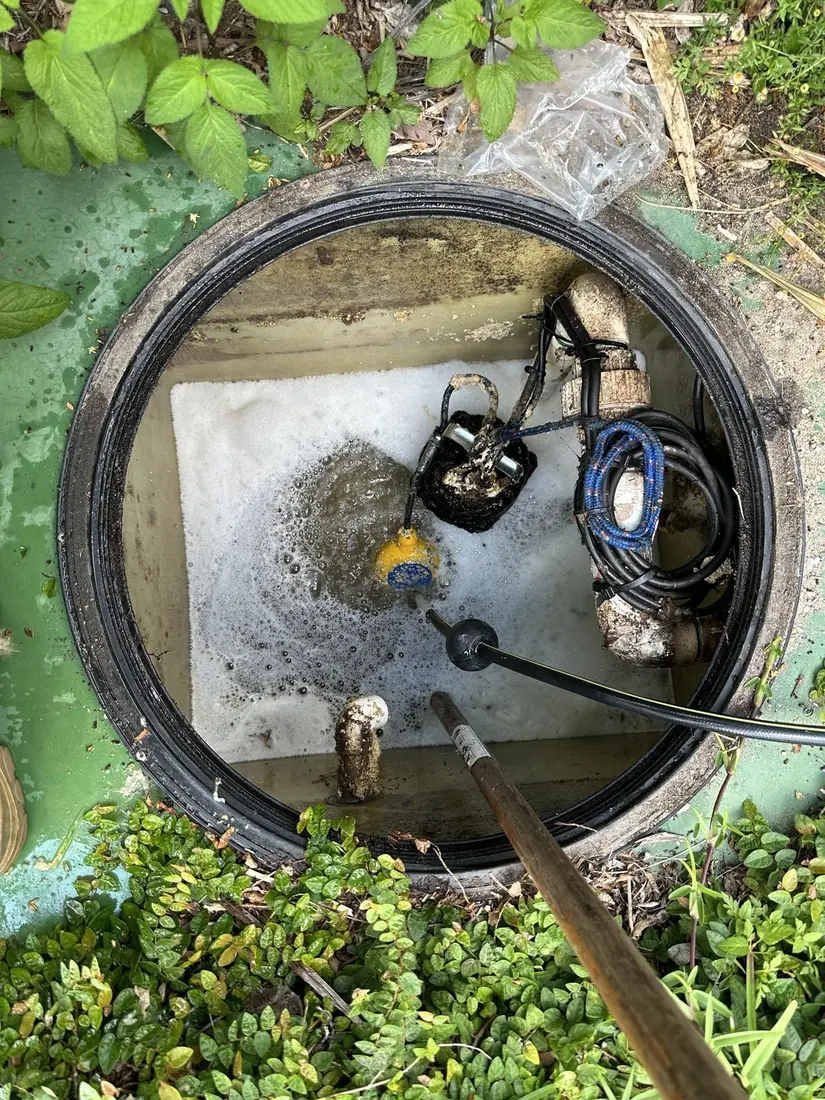
Stormwater pumps fail differently. The water's cleaner — no fat, no wipes — but it carries silt, leaf litter and grit. They don't really sit idle between storms either: ground water can seep into the pit through the walls, so the pump keeps cycling and then cops a first-storm surge on top. Leaf debris can mat over the grill around the pump and choke the intake.
Most of our stormwater repair work is reconfiguring systems other plumbers left behind — floats that were never set to swing freely, sat at the wrong levels, or left fouling on the pit wall and cabling, so the pump short-cycles or won't cut in when it should. Sydney's wetter run of recent years has basement carparks, sub-floor sumps and strata stormwater systems working harder than they were sized for, and a badly set-up float shows up fast under that load.
When a repair isn't worth it — end of service life, undersized for current loads, or an alarm system that can't be retrofitted compliantly — see our stormwater pump installation page.
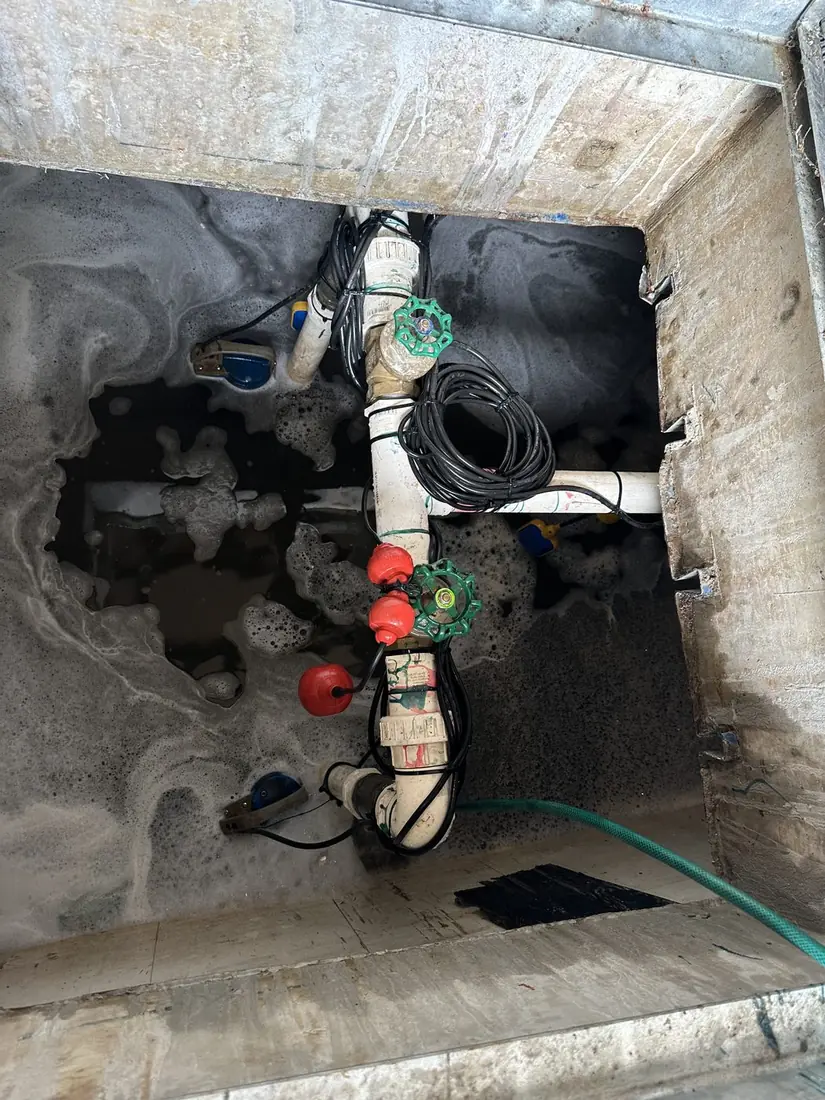
Pumps rarely fail without warning. The warning just tends to be subtle until it isn't.
Even if it stopped, it fired for a reason — the float saw the pit fill faster than the pump could empty it. Don't reset it and walk away.
Toilets, showers or floor drains running slow or gurgling. The pump can't keep up with the flow, isn't pumping, or the float is firing late.
Bearing rumble points to internal wear. No noise at all while the pit is filling points to the pump not activating — float switch, motor or panel side.
A stuck impeller drawing overload current, moisture in the windings dropping insulation resistance, or a failed non-return valve creating back-pressure.
Run-stop-run-stop is normal. Continuous running or rapid short cycles point to non-return valve failure, float trouble or pit volume loss.
A sealed pit shouldn't smell, and the ground around it shouldn't be wet. The lid seal, vent, or pit integrity needs attention before it gets worse.
Sometimes the pump's working perfectly and the system still fails — because the pit itself is the problem. Cracked walls, failed sealing at the riser, ground water seeping through deteriorated concrete, lid damage, or subsidence around an aging structure. A cracked pit or a failed lid seal also lets sewer gas escape, so often the first sign is a smell around the pit before anything else shows up.
The catch is that a failing pit reads like a failing pump. It runs longer every cycle, the alarm fires in heavy rain, and the pump cops the blame — but the diagnostics come back clean. Healthy megger and amp readings mean the pump itself is sound; it's just being made to clear ground water and stormwater leaking in through the pit, on top of the load it was sized for. Run that way for years and the pump does wear out early — but the pit was the problem all along.
Pit replacement is structural work — excavation, a new pit set, the pump and pipework reconnected, recommissioning. It's a project, not a callout. Our pump pit installation page covers what's involved.
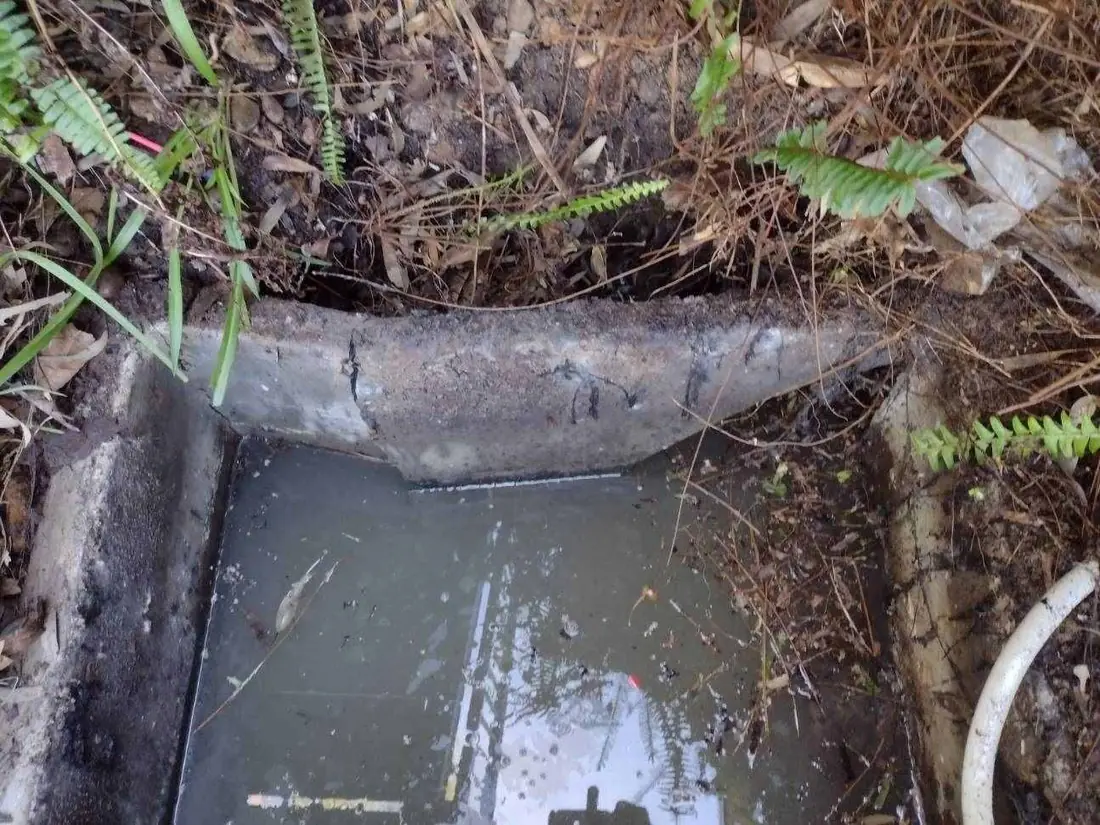
On-site diagnostic, honest assessment, most repairs done in a single visit.
📞 0415 210 267There's no universal answer — it's a case-by-case call we make on site after a proper diagnostic. Here's the framework we work to.
We don't make that call from a phone description — we come on site, run the diagnostics, and tell you honestly which is the cheaper, longer-lasting option. If it's a repair, we repair it. If it's a replacement, we explain why and quote it before we touch anything. Our sewer pump installation and stormwater pump installation pages cover what replacement looks like.
Four steps, from the phone call to the written report — no chasing, no surprises.
Tell us what the pump's doing — alarm, smell, flooding, won't start, cycling odd. We lock in a date and time that works for both of us.
Pit access, megger and amp testing, mechanical inspection. We find what's actually failed before we quote the repair.
Most repairs done in a single visit. Parts on the van for common failures, same-day pickup from suppliers for the rest.
Written report sent through — test readings, what we did, what to watch for, and your next service date so it doesn't repeat.
On cost: you'll know what the repair involves before we start it — a written quote after diagnosis, and the quote is the job. You'll never learn the price from the invoice.
Send your name, number and what's going on — we'll get back to you the same business day. For active flooding or sewage backup, please call instead.
Urgent? Call 0415 210 267 — 24/7.
Repair work touches licensed plumbing, restricted electrical and confined-space entry — here's what backs every job we sign off.
Sewer Pump Services operates under a current NSW plumbing contractor licence — licensed plumbing and drainage work, on record.
Plumbing and drainage work is carried out to the AS/NZS 3500 standard family — the benchmark for compliant work across Sydney.
Issued by NSW Fair Trading under the disconnect/reconnect framework (UEERL0004). We connect the pump and alarm, set up the control panel and fit the overload protection ourselves; your electrician runs the supply.
Statement of Attainment from Pinnacle Safety and Training (RTO 40496). Deep pits and confined spaces are part of the trade — most residential pits never need it, but when one does, we're set up for it.
Public liability and workers compensation cover in place across all work, with certificates of currency available on request.
A plumbing trade since 1985, pumps-only since 2010. You deal with the same operators from first call through to commissioning.
Straight answers about pump repair work in Sydney.
Most repairs are completed in a single on-site visit, but the time on site varies with pit access, what's actually failed, and whether a part has to come from the workshop. A float switch swap is shorter than a control-panel rebuild; a full pump replacement on a tight basement pit takes longer than one in a side yard. We'll give you a clearer estimate once we've seen it.
The cost depends on what's failed, the brand and model of the pump, parts availability in Australia, the access to the pit, and whether the control panel needs work too. Every visit is quoted on the day, before we start. We don't run flat-rate pricing because no two pump pits are the same.
Both can be the right answer — it comes down to the pump's age, what's failed, and the state of the pit, motor and rising main around it. As a rule, a single-component fault on a mid-life pump with healthy megger and amp readings leans toward repair; multiple failure points on an older unit, or a repeat repair history, leans toward replacement. We don't decide until we've run diagnostics on site. If replacement is the better call, see our sewer pump installation and stormwater pump installation pages.
We carry the parts that fail most often — float switches, common non-return valves, and the most common replacement parts for the brands we service most. Full replacement units are usually a same-day or next-day pickup from our supply partners.
We repair Davey, Liberty, DAB, Grundfos, Mono, Flygt, Bianco, Zenit, Ultraflow, Saber and most other major brands. We keep stock on the most common residential pumps so most repairs and replacements are done in a single visit. If we don't have your pump on hand, we'll tell you up front before you commit.
Where we can, yes — we run a same-day booking system for repair work. If your pump is failing right now and the pit is filling, that's an emergency: see our emergency callouts page or call 0415 210 267.
Common causes are a clogged or jammed impeller drawing overload current; a stuck non-return valve creating back-pressure; moisture in the motor windings dropping insulation resistance; or a cracked housing letting water into the wiring. It's a diagnostic question, not a phone-fix one. If it's tripping right now and the pit is filling, see our emergency callouts page.
The alarm is telling you the pit level is too high — which means either the pump isn't running (power, float, motor) or it's running but not moving water (impeller wear, blocked discharge, jammed non-return valve). Don't keep flushing. Our pump alarm guide covers exactly what to do right now; if the pit is filling, see our emergency callouts page.
That's usually pit failure, not pump failure — cracked pit walls, failed sealing at the riser, or ground-water ingress through deteriorated concrete. The pump may be working perfectly, but it's now pumping rainwater and groundwater alongside the waste it was sized for. Run-hours blow out, the pit never empties cleanly, and the pump wears out years early. The fix is pit repair or replacement — see our pump pit installation page for what's involved.
Most repair callouts could have been avoided with a service the year before. Float fouling, fat buildup, early bearing wear, dropping insulation resistance — these all show up on a service visit before they fail the pump. See our pump servicing & maintenance page for what regular servicing actually catches.
Yes — we work with strata managers and building managers across the Sutherland Shire, Eastern Suburbs, Inner West and Lower North Shore. Pump pits, rising mains, alarm panels and electrical switchgear in strata buildings are common property and the responsibility of the owners corporation. We issue reports formatted for committee minutes and AGMs. Our strata pump services page covers how we work with buildings.
Based in the Sutherland Shire, repairing sewer, stormwater and grease trap pumps across greater Sydney.
Cronulla · Caringbah · Sutherland · Miranda · Bundeena · Burraneer · Lilli Pilli · Yowie Bay · Sylvania Waters · Como · Woolooware · Kangaroo Point
Manly · Mosman · Dee Why · Brookvale · Freshwater · Curl Curl · North Curl Curl · Collaroy · Whale Beach · Palm Beach
Cammeray · Longueville · Hunters Hill · Lane Cove · Northbridge · Chatswood
Bondi · Randwick · Coogee · Maroubra · Vaucluse
Newtown · Marrickville · Leichhardt · Ashfield
Not listed? Call us — we cover all of metropolitan Sydney for repairs and same-day callouts.
Tell us what it's doing — alarm, smell, flooding, won't start, cycling odd. Diagnostic-led repair, an honest call on repair vs replacement, single-visit on most jobs.